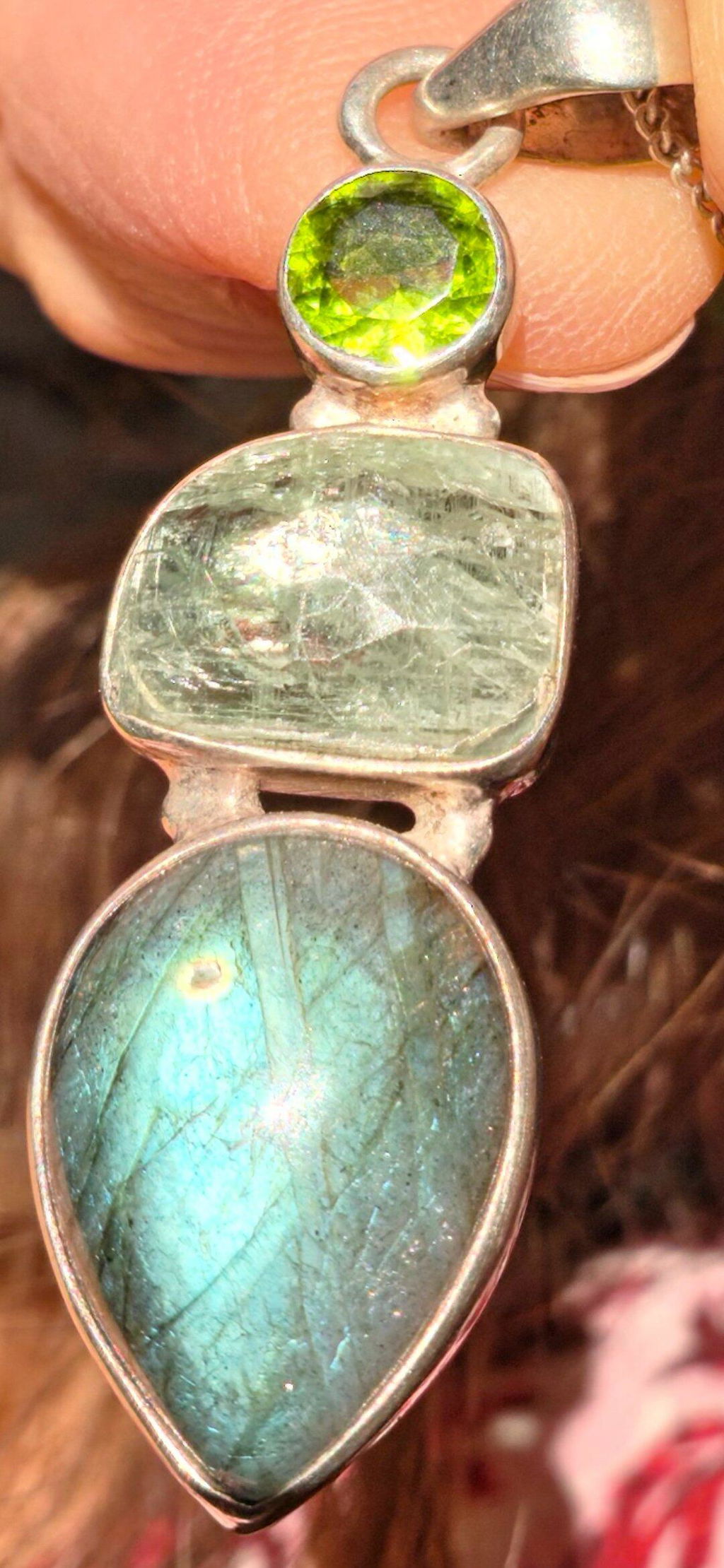
Handmade jewelry: how to really recognize it
In brief:
- Handmade jewellery is characterised by imperfections and visual marks that attest to manual craftsmanship. The objective value comes from the piece's characteristics, not bureaucratic certification. Their authenticity can be recognised by observing details such as hallmarks, weight, and finishes.
A handmade piece of jewellery is defined as an artefact where direct human intervention determines the shape, finish, and character of the final piece. This clearly distinguishes it from an industrial product, where a machine replicates every detail in series. Recognising handmade jewellery is not a matter of taste: it is a skill acquired by observing materials, imperfections, and hallmarks. According to the MIMIT guidelines updated in July 2026, the phrase "handmade" can also be used by operators not registered in the Register of Artisans, provided the information is truthful. This means that the value of an artisanal piece of jewellery lies in its objective characteristics, not in a bureaucratic stamp.
How to recognise handmade jewellery: distinguishing marks
The first sign of an authentic artisanal piece of jewellery is the presence of small imperfections. These are not flaws: imperfections and micro-differences in engravings are the signature of the human hand. A perfectly uniform surface on every centimetre, without any variation, almost always indicates mechanised production.

Beyond the visual aspect, the tactile sensation is very important. A handmade piece of jewellery often has a slightly irregular weight, edges that vary in thickness, and a texture that changes from point to point. These details are not random: they arise from the fact that every stage of processing, from casting to finishing, passes through the hands of a craftsman.
Hallmarks and guarantee marks are another key element. In Italy, silver jewellery must bear the fineness mark (e.g., 925 for sterling silver) and the maker's mark. The presence of these marks, legible with a magnifying glass, confirms that the piece has passed the checks required by regulations. To learn more about certifications for artisanal silver, there are specific guides that explain how to interpret them.
Here are the main signs to look for when you want to recognise artisanal jewellery:
- Surface variations: small undulations, file marks, or chasing marks visible to the naked eye or with a magnifying glass.
- Uneven weight: the piece is not perfectly balanced like a machine-stamped product.
- Legible hallmarks: metal fineness mark and maker's mark engraved, not cold-stamped.
- Visible joints: artisanal solders leave subtle traces, different from the invisible joints of machines.
- Non-identical finishes: on a pair of handmade earrings, the two pieces are similar but never identical to the millimetre.
A tip: before purchasing online, always ask the seller for a close-up photo of the joints and the back of the piece. An authentic artisan has nothing to hide.
Artisanal and industrial jewellery: what differences truly matter?

The distinction between artisanal and industrial jewellery is not just about aesthetics. Craftsmanship creates unique pieces with a story, while industry guarantees consistency and replicable standards. Both have a market but respond to different needs.
Artisanal jewellery is born from a process where the artisan can intervene at every stage to correct, adapt, and personalise. Artisanal production allows for interventions during processing to correct details and adapt each piece. This results in an aesthetic and structural quality that mass production cannot guarantee by definition.
Regarding durability, artisanal jewellery ages uniformly and offers greater repair margins than industrial jewellery. A jeweller can work on a handmade 925 silver ring to resize it, replace a stone, or refinish the surface. On an industrial piece, the same intervention is often not technically possible.
| Characteristic | Artisanal Jewellery | Industrial Jewellery |
|---|---|---|
| Uniqueness of the piece | Each piece is different | Identical pieces in series |
| Repairability | High, direct intervention by the jeweller | Limited, depends on the design |
| Traceability of origin | Often documented | Rarely available |
| Identity value | Strong, linked to the history of the piece | Standardised |
| Average price | Higher for a single piece | Lower due to scale |
The legal qualification of the company does not necessarily coincide with the quality of the product. The value of artisanal jewellery lies in the skills, craftsmanship, and objective characteristics of the piece, not in the producer's commercial register.
How to evaluate materials and authenticity with practical methods
Evaluating the materials of a piece of jewellery is the most concrete step to verify its authenticity. The most well-known test to distinguish gold from brass is performed on unglazed ceramic: gold leaves a golden streak, brass a black streak. This method is quick, minimally invasive, and does not require professional tools.
Brass is a legitimate material and widely used in ethnic artisanal jewellery, but it must be declared correctly. The problem arises when it is passed off as gold or silver. The green patina that appears over time on a piece of jewellery indicates the presence of copper in the alloy, typical of brass. Recognising this phenomenon allows you to correctly evaluate the material before purchase.
Regarding durability, electroplating and PVD coatings compliant with REACH and RoHS standards extend the life of the jewellery from 2 to 5 years. These European standards ensure that surface treatments do not contain harmful substances. A serious seller always indicates which treatments have been applied and whether they comply with these regulations.
Follow these steps to evaluate the authenticity of a piece of jewellery before purchasing:
- Look for the metal hallmark. On authentic silver, you will find "925" or "Sterling"; on gold, you will find the fineness in parts per thousand (750 for 18-carat gold).
- Perform the ceramic test. Rub the jewellery on an unglazed tile and observe the colour of the streak.
- Check for green patinas. A green discolouration indicates copper in the alloy, therefore brass or bronze, not gold.
- Ask for the product sheet. An authentic artisan provides information on materials, treatments, and origin.
- Check transparency on the supply chain. Those who produce quality handmade jewellery indicate the country of production and often the artisan's name.
A tip: for jewellery purchased online, always ask if the surface treatments comply with REACH standards. It's a simple question that immediately distinguishes serious sellers from improvised ones.
Why the cultural value of artisanal jewellery is irreplaceable
Artisanal jewellery carries a story that no machine can replicate. Traditional techniques such as filigree, granulation, and chasing are handed down through generations and represent a tangible cultural heritage. Each technique has a geography: Sardinian filigree, coral processing from Torre del Greco, Tibetan or Berber ethnic goldsmithery. Buying an artisanal piece means carrying a fragment of that tradition with you.
«The combination of manual skills, cultural know-how, and local traditions creates an intangible value that is reflected in the experience of those who own the jewellery. It's not just an object: it's a story that continues over time.»
This narrative value is what craftsmanship uniquely offers compared to industrial production. It is not about absolute superiority, but a difference in nature. Those who choose an artisanal ethnic piece of jewellery, such as a silver pendant with lapis lazuli or a worked brass Berber ring, also choose the meaning that piece carries. For those passionate about ethnic jewellery and cultural identity, this aspect is often the main reason for purchase.
The goldsmith district of Torre del Greco, for example, is internationally recognised for its coral and cameo processing. Buying a piece from that tradition means supporting a local economy and preserving techniques that would otherwise risk disappearing. The same applies to Tibetan, Nepalese, or African artisanal productions, where every engraved symbol has a precise meaning linked to the culture of origin. Those who buy on platforms like blindenwerkstatt.shop often find pieces that document this provenance transparently.
Key points
Recognising handmade jewellery requires observing imperfections, verifying hallmarks, testing materials, and evaluating the seller's transparency about the origin and applied treatments.
| Point | Details |
|---|---|
| Imperfections as a signature | Small variations in surface and finishes indicate authentic manual craftsmanship. |
| Mandatory hallmarks | Look for the metal fineness mark (e.g., 925) and the maker's mark on each piece. |
| Material testing | The test on unglazed ceramic quickly and non-invasively distinguishes gold from brass. |
| Protection standards | Coatings compliant with REACH and RoHS ensure the durability and safety of the jewellery over time. |
| Cultural value | Each piece of artisanal jewellery carries a story linked to traditional techniques and precise geographical origins. |
The authentic charm of craftsmanship: my direct experience
After years spent selecting and studying artisanal ethnic jewellery, I have learned one thing that manuals do not teach: the value of a handmade piece is perceived even before analysing it. There is a quality in the surface, a weight in the hands, a consistency in the details that a trained eye instinctively recognises. But intuition alone is not enough.
What changed my approach was understanding that imperfections are not a problem to tolerate: they are proof that someone has dedicated time, attention, and skill to that piece. A 925 silver ring with a slightly visible joint is worth more, in my eyes, than a perfect one coming out of an industrial mould. Because behind that joint there is a person, not a program.
The most honest advice I can give to anyone approaching the purchase of artisanal jewellery is this: ask questions. An authentic artisan answers with details, tells the process, indicates the materials. Those who cannot answer, or answer vaguely, probably do not have much to say about the piece they are selling.
— Il mondo di Wit
Authentic artisanal jewellery: Il mondo di Wit's collection
Il mondo di Wit was born from the conviction that every piece of artisanal jewellery deserves to be told, not just sold. The collection includes handmade 925 silver pieces, often enriched with natural stones such as lapis lazuli, turquoise, and onyx, selected for authenticity and quality of workmanship.

Every piece available on the site comes with material documentation and an indication of the relevant artisanal tradition. From antique silver ethnic pendants to VEDA 925 silver earrings, each creation is a unique piece that meets the authenticity criteria described in this article. For those looking for an artisanal ethnic ring or a 925 silver rigid bracelet, the collection offers pieces with history, verifiable materials, and transparent workmanship.
Frequently asked questions
How do you recognise handmade jewellery?
Handmade jewellery features small imperfections on the surface, variations in finishes, and metal hallmarks legible with a magnifying glass. These elements are direct evidence of manual workmanship.
How do you distinguish brass from gold in ethnic jewellery?
Rub the jewellery on unglazed ceramic: gold leaves a golden streak, brass a black streak. The appearance of a green patina over time indicates the presence of copper in the alloy, typical of brass.
Is there a certificate for artisanal jewellery?
In Italy, precious metal jewellery must bear the fineness mark (e.g., 925 for silver) and the maker's mark. The term "handmade" can be used by any operator as long as it is truthful, according to the MIMIT 2026 guidelines.
How long does brass jewellery with protective coating last?
Electroplating and PVD coatings compliant with REACH and RoHS standards extend the life of brass jewellery from 2 to 5 years. Durability also depends on frequency of use and care in storage.
Why is artisanal jewellery more expensive?
The higher price reflects the processing time, material selection, and potential for future repair. Artisanal jewellery is a unique piece that can be modified and restored, unlike an industrial mass-produced item.