Examples of handmade brass jewelry: 8 unique pieces
In short:
- Handcrafted brass jewelry pieces are unique, made by hand using sustainable techniques and materials. Manual craftsmanship and personalized finishes enhance each creation, highlighting its cultural and environmental value. Quality is recognized in the finishes, certified materials, and the ability to tell an authentic story.
Handcrafted brass jewelry pieces are handmade creations that combine manual metalworking, finishing techniques, and often recycled materials to create unique and unrepeatable items. The most significant examples of handcrafted brass jewelry demonstrate how a versatile and accessible alloy can become an expression of style, culture, and authentic craftsmanship. From the hoop earring with a hand-polished finish to the necklace with a real leaf imprint, each piece tells a precise creative process. Il mondo di Wit selects and offers handmade ethnic jewelry that embodies exactly this approach, where sustainable material meets cultural design.
1. Examples of handcrafted brass jewelry: snake hoop earrings - ZUMAR
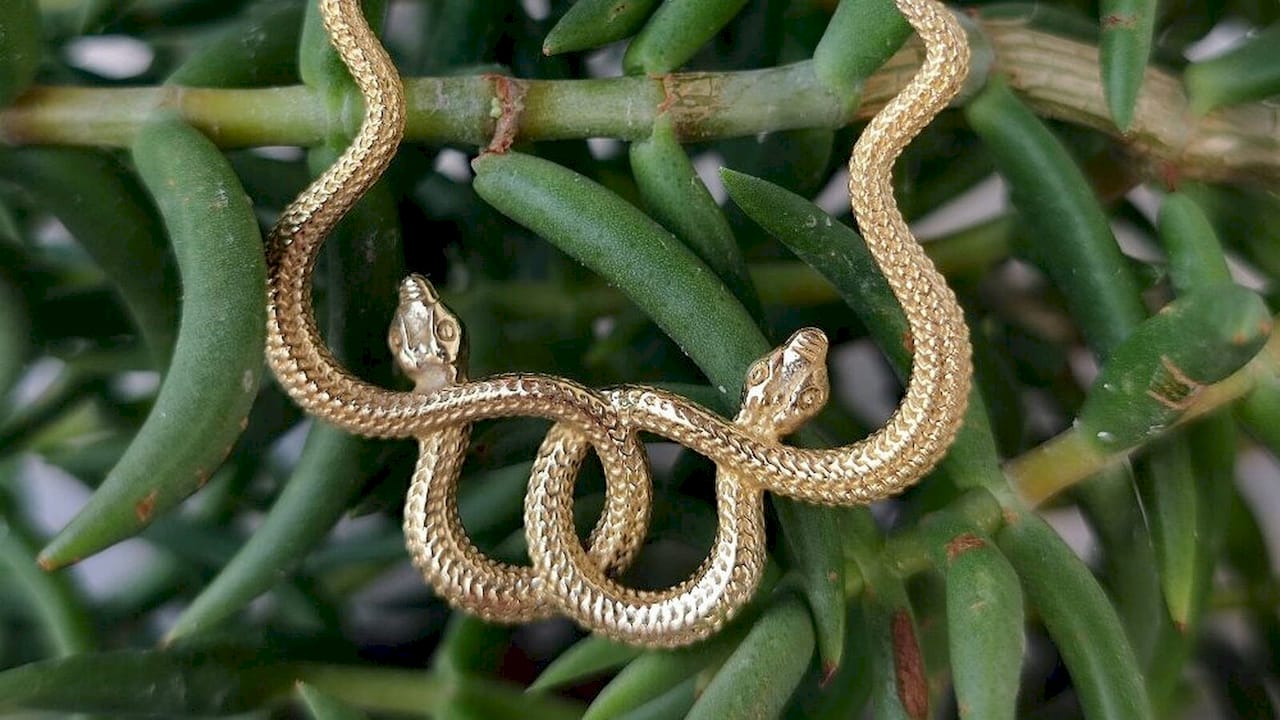
Snake hoop earrings represent one of the most recognizable examples of handcrafted brass jewelry. The sinuous shape recalls the stylized snake, an icon present in many goldsmithing traditions from the Mediterranean to Central Asia.
These earrings are made of brass, with a diameter of approximately 4.7 cm and a hook closure for everyday comfort. The hand-polished finish gives them a warm golden glow, different from the coldness of industrial yellow gold. Each piece bears small surface variations that make it unique.
-
Material: handcrafted recycled brass
-
Diameter: approximately 4.7 cm
-
Closure: ear hook
-
Finish: manual polishing with warm reflections
Pro tip: When looking for brass earrings, check if they are additionally plated or not. Without plating, they can oxidize but can always be polished and thus returned to their original new state. If they are plated, this cannot be done.
2. Oak leaf necklace with 24K gold plating
The Oak Leaf necklace is a perfect example of how nature becomes raw material in the design of handmade brass jewelry. The process begins with a real leaf, used to imprint its texture onto a brass sheet during pressing.
Each imprint is different. This means that no two necklaces are identical, even if produced using the same technique and by the same artisan. The 24K gold plating applied to the hand-polished brass adds warm and refined reflections, without covering the natural texture of the leaf.
| Feature | Detail |
|---|---|
| Base material | Hand-polished brass |
| Finish | 24K gold plating |
| Leaf size | Approximately 3.5 cm |
| Necklace | Adjustable length |
| Uniqueness | Real leaf imprint, unique to each piece |
-
The real leaf pressing process ensures that each piece has an original texture
-
24K gold plating on brass is a technique that enhances the natural warmth of the alloy
-
The adjustable necklace adapts to different clothing styles, from casual to elegant
This type of jewelry combines aesthetic and cultural value. The oak leaf is a symbol of strength and rootedness in many European traditions, and wearing it as an ornament adds a meaning that goes beyond a simple accessory.
3. Hand-painted brass jewelry: patina and pigment techniques
Manual coloring is the technique that most distinguishes unique brass jewelry from industrial productions. The process starts with hand-cutting the brass sheet, continues with the creation of textures through fretwork or hammering, and concludes with the application of patinas and pigments.
The Domestika course dedicated to hand-painted metal jewelry teaches exactly this process, from sheet metal working to the application of controlled oxidations. The aesthetic variations obtained with natural and industrial pigments make each piece visually original, even within the same series.
-
Hand-cutting the sheet: the artisan shapes the metal with shears or a jeweler's saw, creating forms that machines cannot replicate with the same expressive irregularity.
-
Fretwork: a technique that creates openings in the metal for effects of lightness and visual transparency.
-
Hammering and texture: the surface is worked to create reliefs that catch the light differently from every angle.
-
Application of patinas: natural or industrial pigments are spread on the surface to add color and depth.
-
Controlled oxidation: the metal is exposed to chemical reagents to achieve aged effects or particular colorations.
The aesthetic variations in handcrafted jewelry strongly depend on the working of the sheet and the application of patinas. This means that two pieces produced with the same technique will always have a slightly different appearance.
Pro tip: If you want to learn how to make brass jewelry with patinas, start with small scrap sheets to test the pigments before applying them to the final piece. The color changes a lot during drying.
4. Comparison of finishes for brass jewelry: polishing, oxidation, and patination
Finishes determine the final appearance of a handcrafted brass jewel more than any other factor. The choice between polishing, oxidation, and patination completely changes the character of the piece.
Hand polishing
Manual polishing produces a brilliant surface with warm reflections typical of brass. It requires time and progressive abrasive tools, from coarse grit to the final cloth. The result is jewelry that resembles yellow gold without its cost.
Oxidation with liver of sulfur
To achieve aged effects on brass, liver of sulfur is used, a reagent that darkens the metal surface. On brass, the effect is more delicate than on other metals like silver. This means that the final result is less pronounced and requires precise dosing.
The oxidation process must be calibrated with continuous visual testing and monitoring. Exceeding the optimal dose or time does not produce a more intense effect but can irreversibly damage the jewelry's surface.
Patination with pigments
Patinas with sulfur oxide and pigments allow for modulating the oxidized effect, balancing aesthetics and durability. This technique produces the most variable and creative results and is preferred by artisan jewelers looking for pieces with a strong visual identity.
| Technique | Visual effect | Difficulty | Durability |
|---|---|---|---|
| Hand polishing | Bright, warm, golden | Medium | High |
| Oxidation with liver of sulfur | Aged, dark, antique | High | Medium |
| Patination with pigments | Colored, textured, unique | High | Variable |
5. How to recognize quality in a handcrafted brass jewel
Evaluating a handcrafted brass jewel requires attention to details that often escape those unfamiliar with the production process. Quality is evident in the surface, finishes, and materials used.
-
Expressive irregularities: small variations in shape or surface indicate manual workmanship. A piece that is too perfect is almost always industrially produced.
-
Uniform but not mechanical finish: hand polishing leaves a warm and slightly varied luster, different from the cold, uniform brilliance of machines.
-
Declared recycled materials: handcrafted recycled brass jewelry has a reduced environmental impact. A serious artisan always declares the origin of the material.
-
Recognizable cultural inspiration: the best examples of brass jewelry design carry a precise cultural reference, whether it's geometric shapes, natural symbols, or ethnic motifs.
For those looking for personalized brass jewelry, the advice is to directly contact the artisan and ask for information about the production process. An authentic artisan will respond with specific details, not generic descriptions.
Pro tip: Photograph the jewelry in natural light before purchasing. The artificial light of online stores can mask finishing defects or uneven coloration. For tips on how to photograph pieces, Il mondo di Wit's practical guide also offers useful indications for evaluating visual quality.
Key points
Quality handcrafted brass jewelry is recognized by manual craftsmanship, calibrated finishes, and the use of sustainable materials like recycled brass.
| Point | Details |
|---|---|
| Recycled brass as a sustainable choice | Handcrafted recycled brass pieces reduce environmental impact without sacrificing aesthetic quality. |
| Uniqueness guaranteed by manual craftsmanship | Manual cutting, texture, and patinas make each jewel visually unrepeatable, even within the same series. |
| Oxidation requires precise calibration | Liver of sulfur on brass produces delicate effects: dosage and timing must be monitored to avoid damage. |
| Cultural design adds value to the piece | References to natural, ethnic, or geometric symbols transform a jewel into an object with a precise identity. |
Handcrafted brass is not a compromise: it's a choice
I have been working with ethnic jewelry for years, and one thing I often hear is that brass is perceived as a "second-choice" material compared to silver or gold. This perception is wrong, and the concrete examples that exist in the market clearly demonstrate this.
Brass has a warm glow that silver doesn't. It responds to patinas differently, more delicately, which makes it suitable for those seeking an authentic aged effect without overdoing it. Its workability allows for shapes that other metals do not permit with the same manual tools.
What has always struck me about handcrafted brass jewelry is its accessibility without being trivial. An artisan can create a piece with recycled brass, handcraft it, apply a patina with natural pigments, and achieve something that tells a precise story. This is exactly the type of jewelry that those looking for ethnic jewelry trends should consider.
Sustainability is not a marketing detail in this context. Using recycled brass and manual techniques is a concrete production choice, with a real impact on the supply chain. Those who buy handcrafted brass jewelry support a production model that slow fashion applied to jewelry has made increasingly relevant in the sector.
— Il mondo di Wit
Ethnic brass rings on Il mondo di Wit
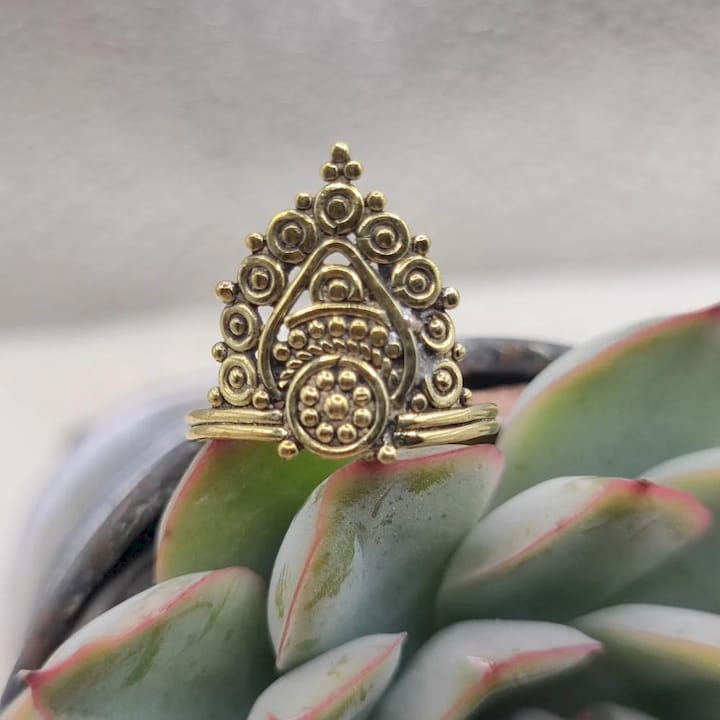
Il mondo di Wit offers a selection of handcrafted brass rings with authentic ethnic designs, handmade with attention to the finishes and cultural identity of each piece. The traditional ethnic LALBAHADUR ring and the handcrafted THAERLA ethnic ring represent two distinct interpretations of the same material, with shapes and workmanship that reflect different goldsmith traditions. For those looking for a piece with a natural stone, the DROP ring with stone combines handcrafted brass and selected minerals in a design not found in mass production. All pieces are available on Il mondo di Wit.
Frequently asked questions
What is a handcrafted brass jewel?
A handcrafted brass jewel is a piece made by hand with a copper and zinc alloy, worked using manual techniques such as cutting, polishing, patination, or oxidation. Each piece has unique characteristics resulting from the production process.
Is brass safe for sensitive skin?
Yes. Brass is an alloy of copper and zinc and does not contain irritating or harmful metals.
How is the aged effect achieved on brass?
The aged effect is obtained with liver of sulfur, applied in small doses and visually monitored during the process. On brass, the effect is more delicate than on other metals, so controlling the application times is crucial for the final result.
What is the difference between polished brass and patinated brass?
Hand-polished brass produces a brilliant surface with warm, golden reflections. Patinated brass with pigments or oxidations presents varying colors, textures, and visual depth, with a more tactile and less uniform appearance.
Where can one find examples of quality handcrafted brass jewelry?
Quality handcrafted brass jewelry can be found from artisans who declare the materials used, manufacturing techniques, and safety tests. Il mondo di Wit offers a selection of handmade ethnic pieces with these characteristics.