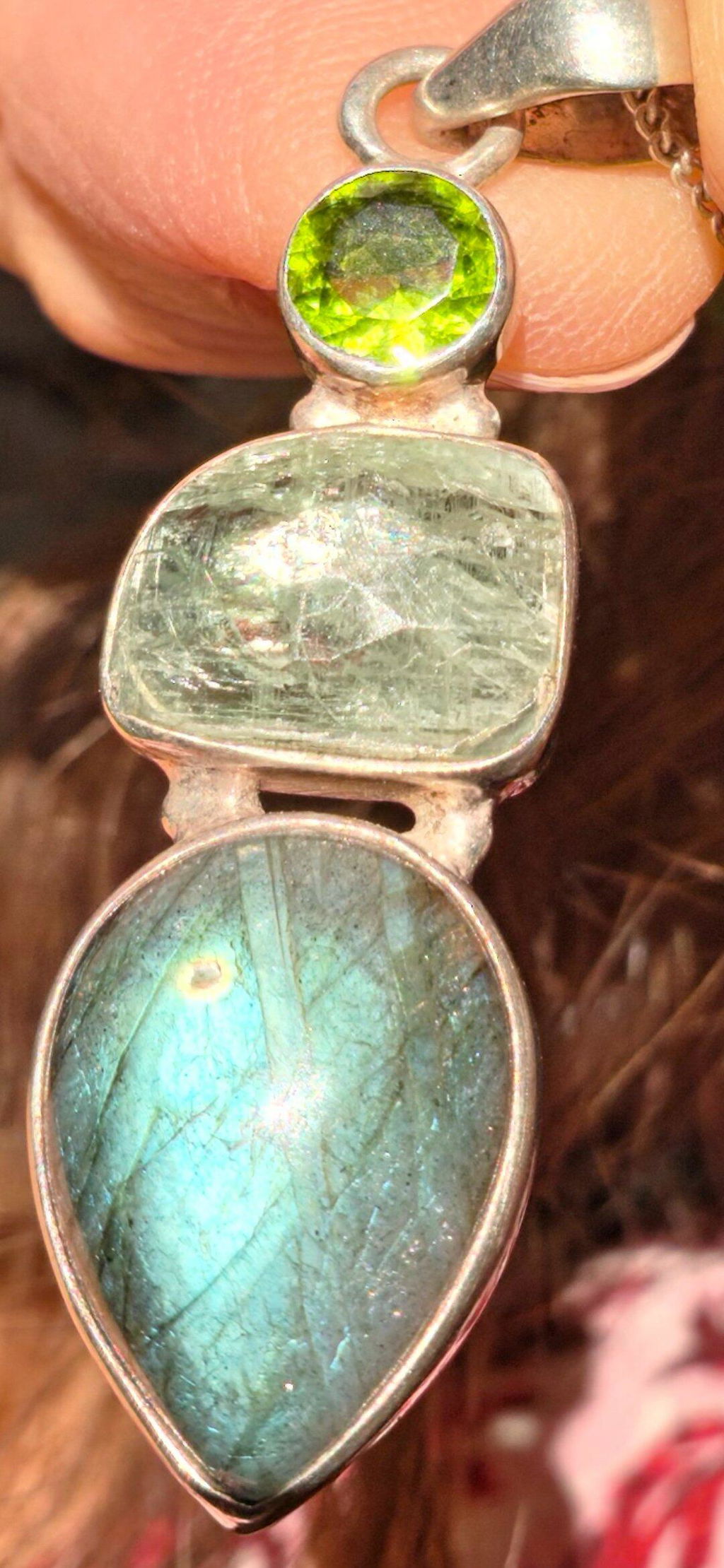
Mixed Metal Jewelry and Ethnic Traditions: A Complete Guide
In short:
- Ethnic mixed-metal jewelry are wearable works of art that combine techniques and cultural symbols. Each piece tells a story of identity, a ritual, or an homage to traditions passed down through generations. Their authenticity can be recognized through imperfections, markings, and a deep understanding of traditional artisanal techniques.
Ethnic mixed-metal jewelry are wearable works of art that combine silver, brass, copper, and gold in a single piece rich in history. Each jewelry-making tradition, from Sardinian filigree to Vietnamese Cham engraving, carries a system of symbols and techniques passed down through generations. These accessories are not just simple ornaments: they tell stories of identity, rituals, and cultural belonging. Those seeking authentic ethnic handcrafted jewelry find in these pieces a form of personal expression that no industrial production can replicate.
What traditional artisanal techniques characterize ethnic mixed-metal jewelry?
The short answer is: many, and often coexisting in the same piece. The combination of different metals arises precisely from the need to unite distinct physical properties and symbolic values. Silver brings freshness and purity, brass warmth and durability, copper conduction and connection to the earth. Each artisan chooses metals based on their tradition and the meaning they wish to convey.
Silver engraving by the Cham people
Cham silver engraving has been passed down for nearly 50 years within a single family in the village of Khanh Hoa, Vietnam. This family continuity is not a marginal detail: it ensures that every technique, every chisel stroke, every dragon or phoenix motif remains true to its original ritual meaning. The pieces are created for rites of passage, meaning that every inscribed mark has a precise function within a shared cultural narrative. When a piece of jewelry is created for a ritual, it carries a symbolic weight that a decorative object never achieves.
Sardinian filigree: hand-woven gold threads
Sardinian filigree requires days of work for a single pendant. Each gold or silver thread is pulled, twisted, and soldered with millimeter precision, creating structures that resemble fabric. The technique has roots in the ancient Mediterranean and carries with it a rich visual vocabulary: spirals, rosettes, and intertwining patterns that are never random. A Sardinian artisan does not design a motif for pure aesthetics, but because that motif has a specific name and meaning in local culture.
Brass, copper, and mixed metals in African and Eastern traditions
In African traditions and those of the Indian subcontinent, brass and copper often appear alongside silver. Brass resists oxidation better than pure copper and lends itself to bold, voluminous shapes, typical of African tribal jewelry. Copper, on the other hand, is used for its conductive properties and warm color, which evokes fire and vitality. Repoussé work, which involves shaping metal from behind to create raised designs on the front, is common in both traditions and allows for three-dimensional surfaces without adding excessive weight.
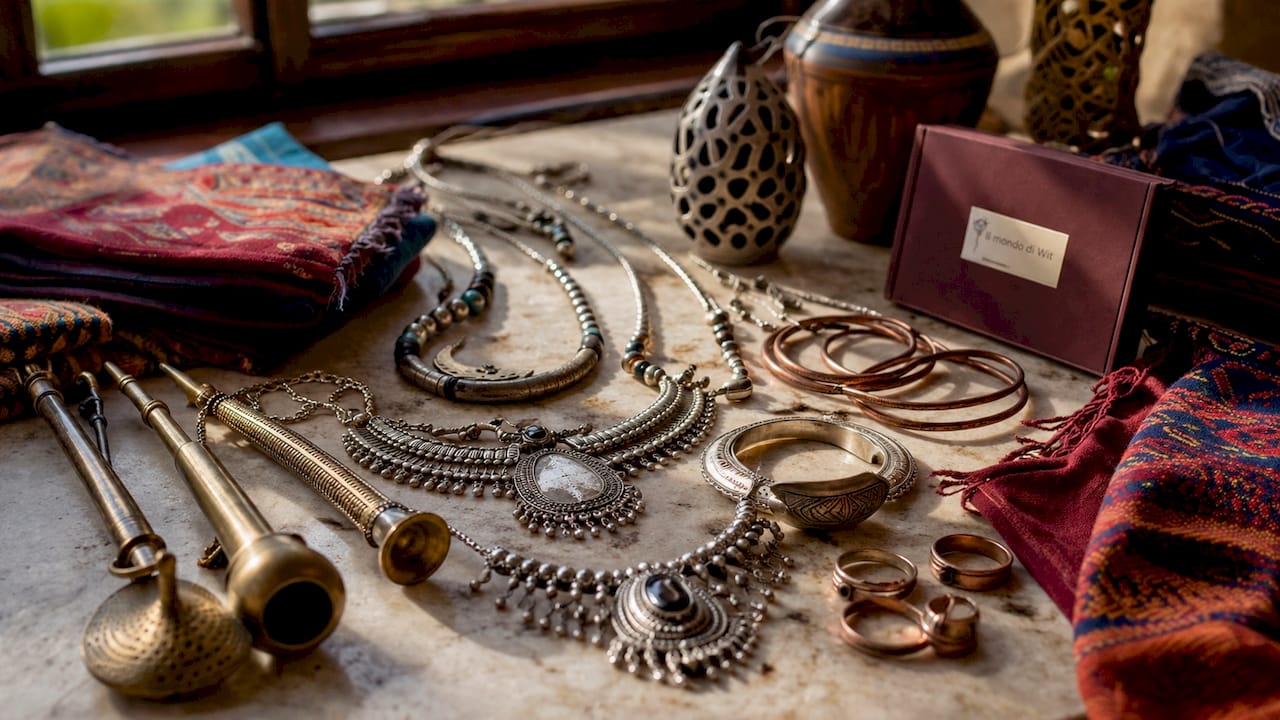
A tip: to recognize an authentic handcrafted piece, look for micro-imperfections: small irregularities in the threads, subtle variations in the relief, visible chisel marks. These imperfections are the artisan's signature and certify that no machinery has replaced the human hand.
What ethnic styles are recognizable in mixed-metal jewelry?
The main ethnic styles in mixed-metal jewelry are distinguished by their color palette, geometric patterns, and choice of materials. Knowing them helps in choosing a piece that truly resonates with one's sensibility, and not just with current trends.
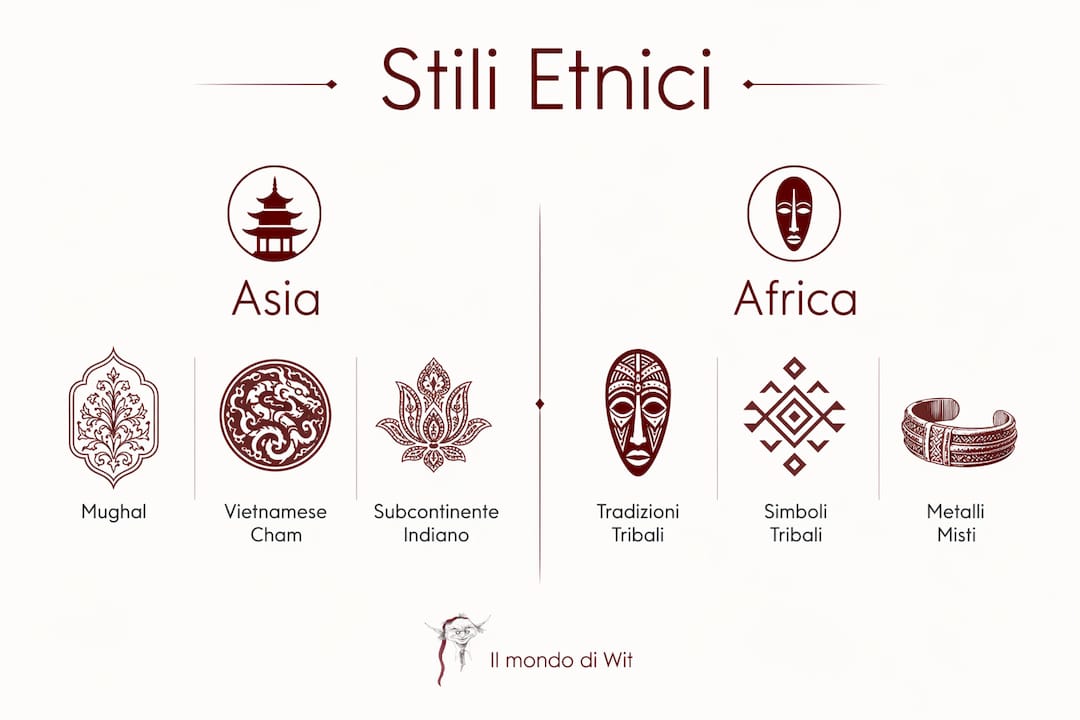
The Mughal aesthetic values unfaceted colored gemstones, such as emeralds, rubies, and sapphires, set in warm gold with floral and vegetal motifs. This style expresses naturalism and abundance: nature is not stylized but celebrated in its richest form. It contrasts sharply with the cold geometry of European Art Deco, which aims for reduction and symmetry. The Mughal tradition, however, accepts complexity and exuberance as positive values.
African jewelry has moved beyond minimalism in favor of bold and symbolic pieces that convey a precise identity. Free forms, rough surfaces, generous dimensions: everything communicates strength and belonging. Tribal motifs are not decorative in the Western sense of the term, but function as a coded visual language that those belonging to the culture can read.
| Ethnic Style | Main Metals | Characteristic Motifs | Visual Effect |
|---|---|---|---|
| Indian Mughal | Gold, silver | Flowers, leaves, animals | Rich, naturalistic |
| African Tribal | Brass, copper | Geometric shapes, ancestral symbols | Bold, three-dimensional |
| Sardinian Filigree | Gold, silver | Spirals, rosettes, intertwining patterns | Delicate, precious |
| Vietnamese Cham | Silver | Dragons, phoenixes, flowers | Engraved, narrative |
Authentic ethnic design must be based on real cultural traditions to have artistic depth. The fusion of styles works when colors and motifs balance each other, not when they overlap randomly. A piece mixing Sardinian filigree and Cham engravings can be extraordinary, but only if the creator knows both traditions well enough to respect them.
What is the symbolic meaning in ethnic mixed-metal jewelry?
Symbolism in ethnic jewelry is not ornamental: it is the main content of the piece. Every shape, every engraving, every combination of metals carries a message that the culture of origin has codified over time.
In Sardinian tradition, symbols have precise and documented meanings:
- The Sardinian Button represents fertility and prosperity, and was worn by brides as a blessing for the new family life.
- The Sardinian Wedding Ring is the symbol of eternal love and marital fidelity, still present in traditional wedding trousseaus today.
- The spirals in filigree recall the cycle of life and the continuous movement of time.
- The rosette motifs evoke the sun and light, central elements in Mediterranean cosmology.
In African cultures, tribal symbols function as signs of identity, belonging, and inner strength. A bracelet with a specific geometric motif can indicate the clan of belonging, social rank, or specific spiritual protection. Wearing that bracelet without knowing its meaning is possible, but knowing it transforms the object into something completely different.
In the Mughal aesthetic, vegetal and animal motifs are not mere decorations. The lotus flower indicates spiritual purity, the peacock represents divine grace, the stylized mango is a symbol of fertility and abundance. These meanings derive from centuries of religious and courtly iconography, and anyone wearing Mughal jewelry carries all that cultural weight, even unknowingly.
A tip: before purchasing ethnic jewelry, ask the seller for the name of the motif and its origin. An authentic artisan or reseller will know the answer. If they don't, the piece is probably not as authentic as presented.
How to choose a handcrafted mixed-metal jewel with ethnic traditions?
Choosing well means going beyond immediate aesthetics. An authentic ethnic handcrafted jewel is a cultural as well as economic investment, and deserves a conscious selection process.
-
Verify the declared materials. A piece of 925 silver has an impressed hallmark, usually "925" or "Sterling". Brass and copper do not have mandatory hallmarks, but a reputable seller will explicitly declare them. Beware of those who use vague terms like "antique metal" without specifying the alloy.
-
Observe the imperfections. As mentioned earlier, micro-imperfections are proof of manual work. A perfectly symmetrical piece without any variation is almost certainly industrially produced, even if sold as handmade.
-
Ask about the origin of the technique. A piece of jewelry inspired by Sardinian filigree is not the same as a piece of jewelry made by a Sardinian artisan using that technique. The distinction matters, both for value and cultural authenticity.
-
Pair consciously. Ethnic mixed-metal jewelry goes well with neutral outfits and natural fabrics like linen, cotton, and wool. A bold piece of brass and copper doesn't need to compete with other accessories: let it speak for itself. You can follow contemporary trends without losing the authenticity of the piece.
-
Care for mixed metals correctly. Silver oxidizes on contact with air and should be cleaned with a soft cloth and specific products. Brass and copper develop a natural patina that many consider part of the piece's charm. If you want to maintain it, avoid abrasive products. If you prefer polished metal, use a non-aggressive metal cream.
-
Consider the jewel as a gift. A piece with a specific symbol, chosen according to the recipient, has an emotional value that a generic jewel never achieves. Choose the symbol based on the message you want to convey, not just on aesthetics.
The preservation of artisanal traditions also happens through conscious purchases. Those who produce by hand, as documented by experiences of artisan workshops across Europe, dedicate hours to each single piece. Supporting this work means contributing to the survival of techniques that would otherwise disappear. The magic of traditional craftsmanship lies precisely in this: every purchase is an act of cultural preservation.
Key points
Mixed-metal jewelry with ethnic traditions is valuable for the techniques, symbols, and history they carry, not just for the materials they are made from.
| Point | Details |
|---|---|
| Distinct artisanal techniques | Sardinian filigree, Cham engraving, and African repoussé work produce different visual and symbolic effects. |
| Non-decorative symbolism | Each motif has a meaning codified by the culture of origin: knowing it transforms the piece. |
| Verifiable authenticity | Look for hallmarks on precious metals, like "925" for silver, micro-imperfections, and a seller who knows the technique's origin. |
| Differentiated metal care | Silver, brass, and copper require different treatments to maintain their appearance and longevity. |
| Purchase as a cultural act | Choosing an authentic handcrafted piece contributes to the survival of ethnic jewelry-making traditions. |
Why these jewels changed the way I look at craftsmanship
I started dealing with ethnic jewelry thinking that the charm lay in the materials. I was wrong. The charm lies in time: the time a Cham artisan spends engraving a dragon on a silver pendant, the time a Sardinian filigree maker takes to twist each single thread. When you hold such a piece in your hand, you feel that time physically.
What the contemporary market often fails to understand is that "ethnic trend" is not a trend. It's a rediscovery. People get tired of interchangeable objects and look for something with a verifiable history. Mixed-metal jewelry with ethnic roots precisely addresses this need, but only if they are authentic. A mass-produced piece with motifs "inspired" by different cultures carries nothing with it, because no one has put in the necessary time.
What struck me most, working with pieces from different traditions, is the internal consistency of each symbolic system. These are not random decorations: each culture has developed a precise visual vocabulary, and artisans know and respect it. Buying authentic ethnic jewelry means entering that vocabulary, even if only partially. And this, in my opinion, is worth much more than any seasonal trend.
— The World of Wit
Handcrafted Ethnic Jewelry: The Il mondo di Wit Collection
Il mondo di Wit selects and offers handcrafted ethnic jewelry in 925 silver, handmade using traditional techniques and inspired by world cultures. Each piece carries a precise identity, visible in the motifs, craftsmanship, and chosen materials.
The collection of 925 silver ethnic earrings includes boho-style pieces with Eastern and Mediterranean influences, handmade and available in variants with natural stones. For those looking for a metal combination, the silver and gold earrings combine the two metals in a round design that recalls the jewelry traditions of the Indian subcontinent. Those who want to explore the entire offering will find on Il mondo di Wit a curated selection of unique pieces, with descriptions explaining the origin and symbolism of each jewel.
Frequently asked questions
What does "mixed metal" mean in ethnic jewelry?
"Mixed metal" refers to the combined use of two or more metals in the same piece, such as silver and brass, or silver and copper. Each metal brings different physical and symbolic properties, and their combination is often codified by the relevant cultural tradition.
How do you recognize authentic handcrafted ethnic jewelry?
An authentic piece will show visible micro-imperfections, hallmarks on precious metals like "925" for silver, and a seller able to explain the technique and cultural origin of the motif.
Do mixed-metal jewels require special care?
Yes. Silver should be cleaned with a soft cloth and specific products to prevent oxidation. Brass and copper develop a natural patina that can be maintained or removed with non-abrasive products, depending on personal preference.
What is the difference between ethnic jewelry and ethnically inspired jewelry?
Authentic ethnic jewelry is made by artisans who belong to or have a deep understanding of the cultural tradition it represents. "Inspired" pieces incorporate aesthetic elements without the original symbolic and technical content, and are usually mass-produced.
Do mixed-metal ethnic jewelry pieces go with contemporary fashion?
Yes. Mixed-metal pieces with ethnic motifs pair well with neutral outfits and natural fabrics. A single bold piece, such as a brass bracelet with tribal patterns, can serve as the focal point of an entire look without the need for other accessories.