


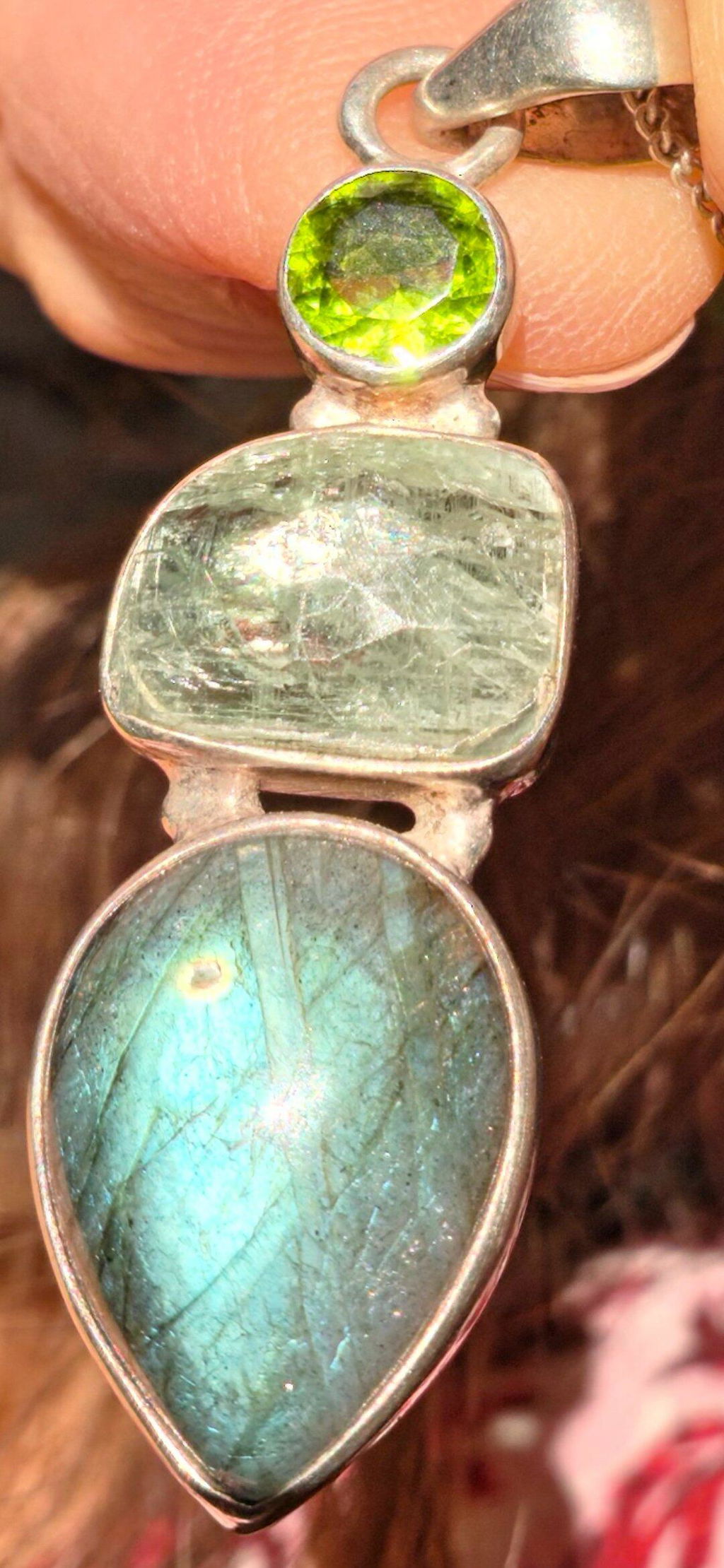
Ho appena ricevuto il ciondolo con pietre diverse (labradorite, kunzite) e lo trovo stupendo!...è propio il ciondolo che avevo visto nella foto dell'annuncio. Veramente stupendo. Il costo é ottimo se paragonato ai negozi della mia zona. Grazie!!
SKU:paco272
Low stock: 4 left
Couldn't load pickup availability
BIODOLA BATIK cotton sarong with tribal patterns. The designs decorating the sarong are made using the batik technique. A typical and traditional craft for your ideal summer sarong. This is also a multi-purpose accessory, adaptable and easy to wear.
Batik is a decorative technique for fabrics known as resist dyeing. Fabrics, preferably white and made of natural animal or plant fibers (cotton and linen), are immersed in a dye bath after the areas that should not be dyed have been reserved (i.e., covered) with wax melted in a bain-marie and then allowed to cool before dyeing.
The process can be repeated several times, reserving other areas and dyeing with progressively darker colors. For this reason, each sarong is a unique piece and can vary in color and intensity precisely due to the handcrafted process.
Additionally, this cotton sarong with tribal patterns can also be used as a sarong, which is a large piece of cotton draped around the waist and worn as a skirt by men and women in many parts of Asia.
The fabric is often dyed with bright natural colors or worked with various geometric patterns and designs.
Discover all the specifications of this BATIK cotton sarong with tribal patterns!
1. Wax application
The artisan hand-draws patterns on the fabric with hot wax, protecting the areas that should retain their original color.


3. Rinsing and drying
After dyeing, the fabric is rinsed and left to dry in natural light, revealing patterns, shades, and slight artisanal irregularities.

4. Final inspection
Once dry, the sarong is laid out, inspected, and hand-finished, checking for color uniformity, edges, and overall fabric quality.

The images are illustrative representations of the main phases of the batik process.
Here you will find our shipping methods in detail such as:
We ship from our headquarters in Italy and the selected products are directly in our possession (there are no shipments from external warehouses or external companies, unless explicitly stated on the product page).
The order is processed within 1-2 working days except for exceptions (holiday periods, absences for events and production periods - advertisements visible on the site)
Prices and times depending on the service chosen at the checkout:
For further information/enquiries contact us
Delivery times (days after delivery to the carrier, working days Monday - Friday) depend on the courier you choose at check-out
Services available:
National prices:
For reasons of simultaneous sales in our shop and fairs, it may happen that the chosen product is not available. We will contact you within 24 hours of your purchase. In case of a possible alternative we send that or cancel the order with an immediate refund.
Damage and loss of packageIf you have chosen insured shipping, we will return the insured value to you as soon as the carrier accredits us (If the carrier requests information/documentation from you, please provide it to us, otherwise we cannot request a refund). Otherwise the shipping and buyer are responsible.
Il Mondo di Wit by Andreas Cattelan is a sole proprietorship registered with the Chamber of Commerce of Livorno since 10/03/2000. Registered for the possession of the trademark for the production/import of precious goods registered number *73LI - Production, distribution and import of precious metal objects, costume jewelery and fashion accessories. Registered office in Via Zara 3, Marciana Marina (LI) - VAT number 01002090452

Thank you for your interest in our products. In addition to the most personalized service possible for you we care that your transactions are as safe and adapted to your needs.
We only use payment methods from companies that guarantee continuous security updates. Of course you are not forced* to rely on these services and you can also pay by bank transfer etc.
Here you will find all payment methods:
Pay online via:
Offline Payments (without you making an online transaction)
All data is transferred in an encoded form using an SSL certificate and cannot therefore be intercepted by external parties.
Il Mondo di Wit by Andreas Cattelan is a sole proprietorship registered with the Chamber of Commerce of Livorno since 10/03/2000. Registered for the possession of the trademark for the production/import of precious goods registered number *73LI - Production, distribution and import of precious metal objects, costume jewelery and fashion accessories. Registered office in Via Zara 3, Marciana Marina (LI) - VAT number 01002090452
Our fabrics are handcrafted from silk or cotton (as specified in the product description).
Each piece is unique and is colored and/or designed with artisanal procedures such as embroidery and hand stamps with hand-engraved stamps.
Thanks to these techniques, each fabric has small imperfections and color variations that make each piece unique and precious . The care and passion we put into the creation of each fabric is reflected in its beauty and quality , guaranteeing a one-of-a-kind artisanal product.
Hand coloring with natural colors requires an initial hand wash in cold water with vinegar or salt to fix the color. Afterwards, washing in the washing machine with similar colored clothes is fine.


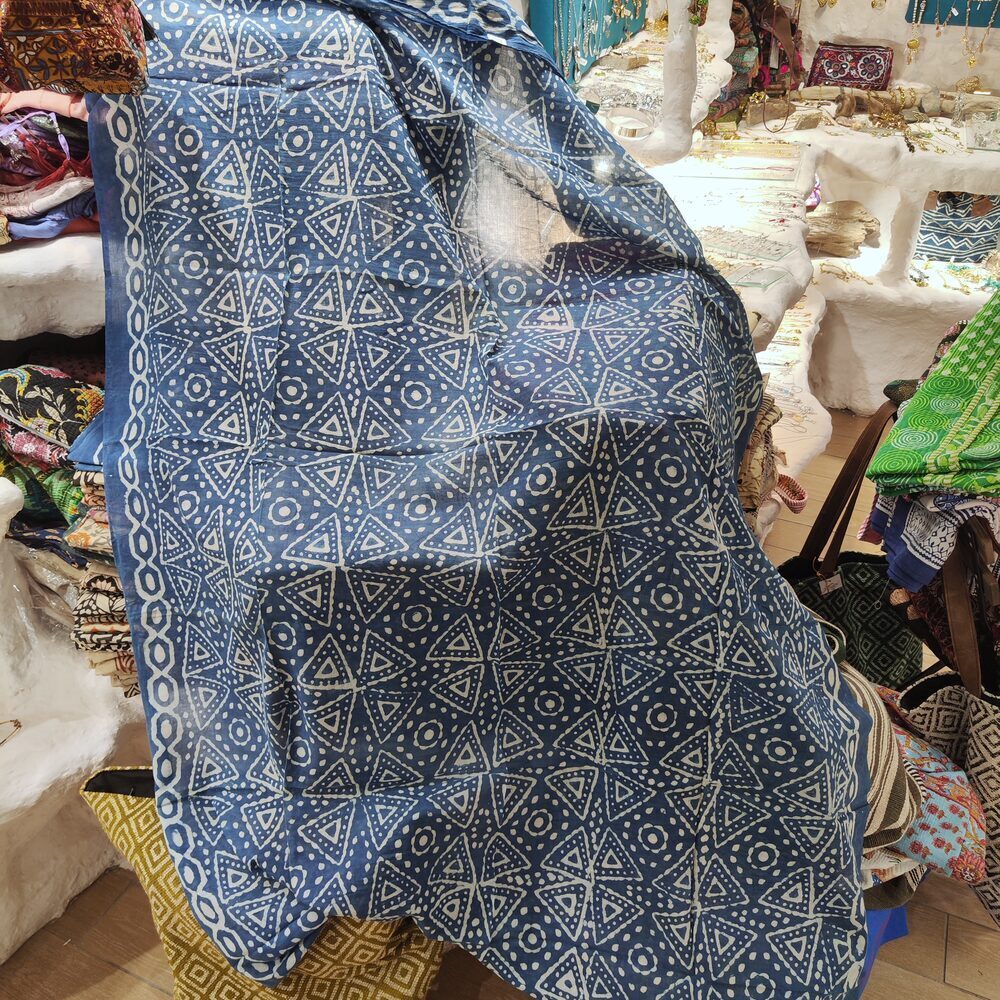
120 × 185 cm
approx. 47.24 x 70.87 inches
Its compact and versatile dimensions allow it to be used as a short sarong, wide scarf, light stole, or shawl.
As this is a handmade product, the measurements may show slight variations of a few centimeters.
