Ethnic earrings from around the world: a guide to symbols
In short:
- Ethnic earrings are handcrafted jewelry that carry specific cultural, spiritual, and social meanings. Each piece tells stories of identity and rites of passage passed down through various materials and symbols. To recognize authenticity, it is important to observe imperfections, know the origin, and the cultural symbolism of each piece.
Ethnic earrings are defined as handcrafted jewelry that carries a specific cultural, spiritual, or social meaning to the tradition of the people who created them. These are not simple ornaments: ethnic earrings from world cultures tell stories of identity, rites of passage, and community belonging. From the Maasai of East Africa to the Polynesian tribes, each piece preserves a precise visual code. Materials such as silver, obsidian, turquoise, and carved wood are not chosen by chance. Each element has a meaning that spans generations.
What are the main world cultures with ethnic earring traditions?
Earrings as a social and spiritual language date back to 2500 BCE in Mesopotamia, where they indicated rank and tribal affiliation. This fact reveals that the function of ethnic earrings has never been purely aesthetic: it was communication.
Traditions are distributed across every continent with very different characteristics:
- East Africa (Maasai, Ndebele): Maasai earrings are large circular disks made of colorful beads, worn by both men and women. The weight and size indicate social status. Among the Ndebele of South Africa, earrings are part of a system of body ornaments that signals age and role in the community.
- Sub-Saharan Africa: Many tribes use carved wooden or cast metal earrings with geometric symbols related to fertility and protection.
- Amazon and South America: Indigenous Amazonian peoples use earrings made of feathers, seeds, and bone. Each material has a direct link to nature and local animistic beliefs.
- Oceania and Polynesia: Men's earrings in Polynesia are symbols of courage and role within the clan. In New Zealand, the Maori tradition uses local greenstone, called pounamu or greenstone, to create pendants and earrings with spiral shapes.
- India and South Asia: The Rabari tribes of Gujarat wear antique silver earrings with geometric engravings. Gujarat tribal earrings in silver represent one of the most refined examples of Indian ethnic goldsmithing.
| Culture | Main materials | Main meaning |
|---|---|---|
| Maasai (Kenya, Tanzania) | Beads, metal | Social status, age |
| Rabari Tribe (India) | Antique silver | Tribal identity, protection |
| Polynesians (Oceania) | Stone, bone, wood | Courage, role in clan |
| Amazonians (Brazil, Peru) | Feathers, seeds, bone | Connection with nature |
| Mesopotamia (Ancient Iraq) | Gold, lapis lazuli | Rank, belonging |
In many African tribal cultures, earrings indicate rites of passage and courage. This ritual use distinguishes ethnic jewelry from any conventional fashion product.
What materials and symbolisms characterize ethnic jewelry around the world?
The materials of handcrafted ethnic earrings are not decorative in a neutral sense. Each choice reflects a specific cosmology, belief, or local resource.
The most recurring materials in traditions around the world include:
- Silver: Used in India, the Middle East, and North Africa for its association with the moon, purity, and spiritual protection. Filigree and chasing techniques keep traditional craftsmanship alive.
- Obsidian: Black volcanic stone used by Mesoamerican cultures such as the Aztecs and Maya. Symbolizes protection and connection with the world of ancestors.
- Turquoise: Central to the Navajo tradition of North America and Tibetan cultures. Represents sky, water, and healing.
- Wood and seeds: Common in Africa and the Amazon. Carved wood often carries totemic symbols linked to protective clan spirits.
- Lapis Lazuli: Used since antiquity in Mesopotamia and Afghanistan. Its intense blue color was associated with the sky and divine power.
Recurring symbols in ethnic earrings have precise meanings:
- Spiral: Present in Maori, Celtic, and Andean cultures. Represents the cycle of life, growth, and renewal.
- Blue eye (Nazar Boncugu): The Nazar talisman has been used for over 2000 years in the Eastern Mediterranean as protection against the evil eye. Earrings with this symbol are widespread in Turkey, Greece, and the Middle East.
- Tree of life: A universal symbol present in Northern European, African, and Asian cultures. Indicates connection between heaven, earth, and ancestors.
Pro tip: When buying ethnic handcrafted earrings, always ask the seller for the name of the technique used. Filigree, chasing, and granulation are techniques with centuries of history: knowing how to recognize them helps you distinguish an authentic piece from an industrial copy.
Ethnic motifs are a symbolic visual language with deep cultural and historical ties. This means that wearing an ethnic earring is an act that carries a narrative, not just an aesthetic.
How to distinguish and choose authentic ethnic handcrafted earrings?
An authentic ethnic earring is distinguished from an industrial replica by precise and verifiable details. Following these steps helps make an informed choice.
- Observe regular imperfections. A handmade piece shows small variations in shape, weight, and finish. These irregularities are the hallmark of craftsmanship, not a defect.
- Verify the material. Authentic silver often bears a hallmark (925 for sterling silver). Natural stones like turquoise, lapis lazuli, and onyx have veins and color variations that synthetic resins do not perfectly replicate.
- Ask about the origin. A reliable seller knows the region of origin, the tribe, or the specific artisanal tradition. For example, the Rabari Tribe ethnic earrings in antique silver carry a precise story linked to the nomadic community of Gujarat.
- Evaluate the weight. Solid silver and natural stones have a perceptible weight. Pieces that are too light often indicate low-quality materials or industrial processing.
- Look for symbolism. Authentic ethnic jewelry always has a decorative motif with a specific meaning. If the seller cannot explain the symbol, it is a red flag.
Pro tip: Photograph the earrings in natural light before buying them online. Direct light reveals the quality of the finish, the veins of the stones, and the details of the engraving. Il mondo di Wit offers a practical guide for photographing handcrafted jewelry and assessing its visual quality.
The distinction between masculine and feminine in earrings is a Western cultural construct. Many ethnic traditions use earrings neutrally or predominantly for men. This changes how an ethnic piece is chosen: gender is not a culturally universal criterion.
How do ethnic earrings influence contemporary fashion?
Ethnic earrings enter contemporary fashion not as folkloric citations, but as design elements with their own narrative power. The difference between an ethnic design and an abstract design lies precisely in the meaning: the former tells a story, the latter is purely formal.
Current trends show some key directions:
- Maxi tribal earrings inspired by Maasai circular shapes, paired with minimalist outfits to create visual contrast.
- Earrings with natural stones like turquoise and lapis lazuli, which evoke Navajo and Tibetan traditions and pair well with natural fabrics like linen and raw cotton.
- Oxidized and worked silver with geometric motifs, inspired by Indian and Berber traditions, used in both casual and formal contexts.
- Asymmetrical earrings that combine symbols from different cultures, reflecting a composite and conscious personal identity.
"Choosing culturally inspired jewelry means valuing a visual language that tells stories and legacies that would otherwise be little known." — Drese Art
The Sapta Matrika earrings in antique silver are an example of how a sacred Indian symbol can become a contemporary piece of jewelry without losing its original meaning. Wearing them requires awareness: knowing the symbol one wears is part of the jewelry's value.
Ethnic craftsmanship also has a social function. Purchasing authentic pieces supports artisan communities that pass down techniques for generations. This applies to Mexican traditions as well as Indian, African, and Polynesian ones.
How to care for ethnic handcrafted earrings?
Ethnic earrings made of silver and natural materials require specific attention to maintain their beauty over time. The maintenance of silver is the first step to preserve luster and artisanal details.
Practical care rules:
-
Wear your earrings as much as possible because any ethnic jewelry develops its charm with use.
-
Store jewelry in bags with a small piece of chalk. Chalk absorbs moisture and reduces oxidation.
-
Do not avoid contact with water, especially saltwater. Saltwater is an excellent antioxidant.
- Do not use ultrasonic cleaners for pieces with glued or set stones. Vibrations can loosen stones or damage more delicate structures.
- Periodically check hooks and clasps. Handcrafted earrings often have handmade silver clasps that can loosen with use.
Regular care is not just practical: it is an act of respect for the craftsmanship that each piece represents.
Key points
Ethnic earrings are, first and foremost, a cultural language: materials, symbols, and artisanal techniques convey identity, history, and specific values of each tradition.
| Point | Details |
|---|---|
| Deep historical origin | Ethnic earrings have existed as social symbols since 2500 BCE in Mesopotamia. |
| Culture-specific symbolism | Every symbol, from the Maori spiral to the Turkish evil eye, has a precise and verifiable meaning. |
| Recognizable authentic materials | Hallmarked silver, stones with natural veins, and perceptible weight distinguish authentic pieces. |
| Fashion and personal identity | Ethnic earrings in contemporary fashion work best when the wearer knows their meaning. |
| Specific care needed | Silver and natural stones require storage in enclosed environments and cleaning with non-abrasive materials. |
The value worn on the ear
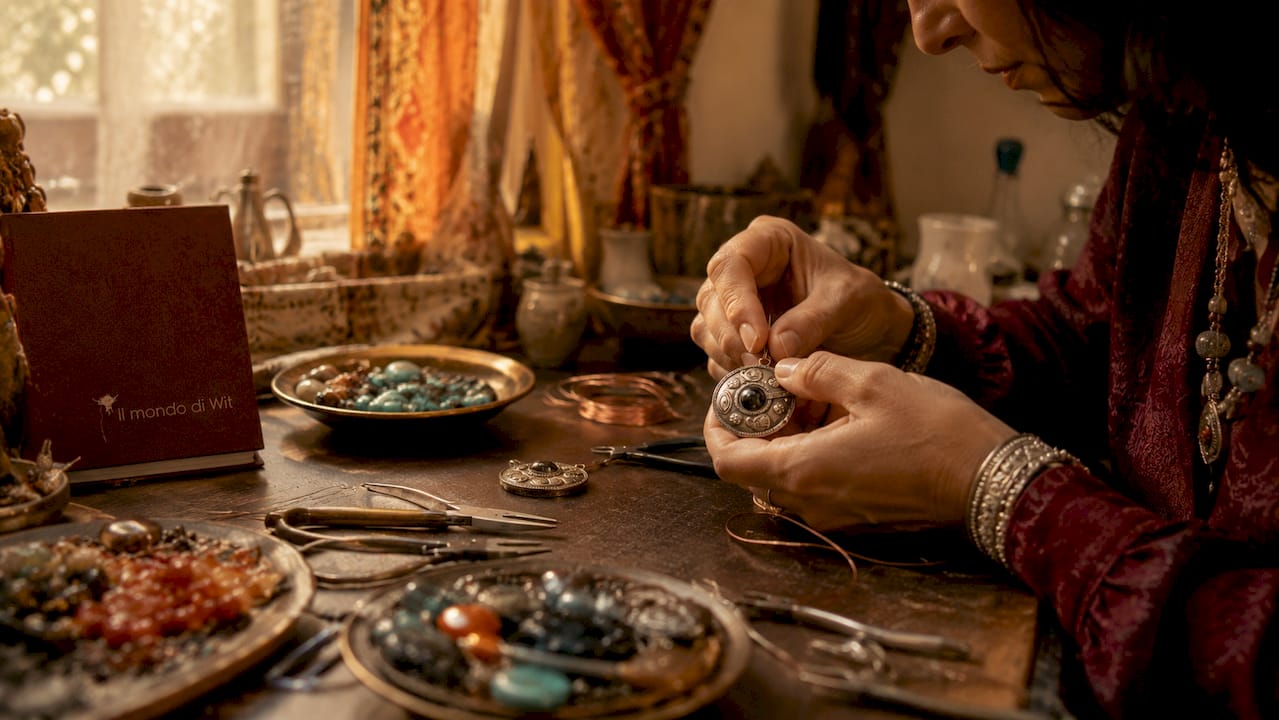
I have learned to look at ethnic earrings differently since I started working with artisans who produce antique silver pieces for Il mondo di Wit. The first thing that changes is the perception of time. A chased silver Rabari earring is not a product: it is the result of a technique passed down orally, often from mother to daughter, in nomadic communities of Gujarat who have never written a manual.
What I find most interesting, and which is rarely read elsewhere, is that the symbolic value of these pieces does not depend on the rarity of the material. An Amazonian wooden earring with a totemic symbol can be as culturally valuable as one made of solid gold. The Western market tends to measure everything in terms of material and weight. The cultures that produce this jewelry measure in terms of meaning and transmission.
My position is clear: wearing an ethnic jewel without knowing its background is not necessarily a missed opportunity. Over all these years, we have found many ethnic jewels whose history is unknown, yet their charm is unique.
— Il mondo di Wit
Handcrafted ethnic jewelry selected for you
Il mondo di Wit collects handcrafted silver pieces with natural stones from specific and documented traditions. Each earring in the collection has a precise origin and an identifiable technique.
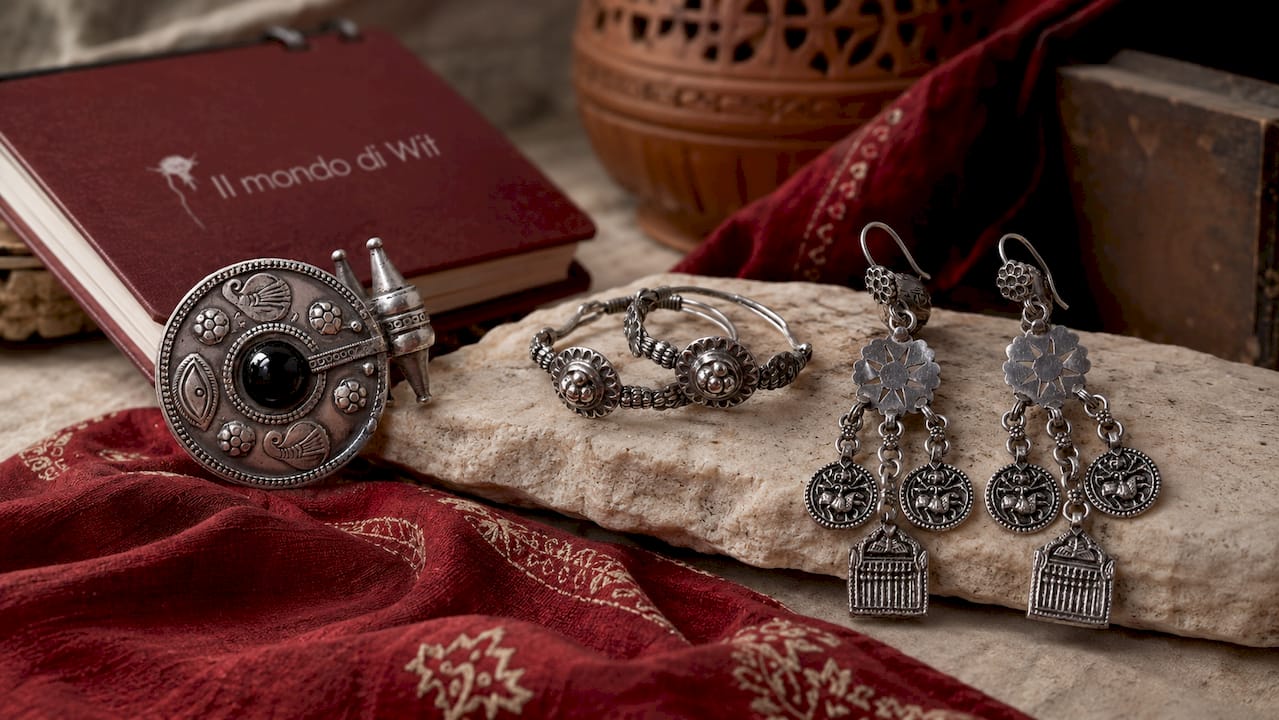
The Gujarat Black Star tribal earrings in silver are among the most requested pieces: they combine Indian chasing technique with a shape that works both in everyday contexts and for special occasions. The Rabari Tribe earrings in antique silver bring the identity of a nomadic community directly to the wearer. For those looking for a sacred symbol with a precise history, the Sapta Matrika earrings in antique silver represent a choice with authentic spiritual meaning.
Frequently Asked Questions
What are ethnic earrings?
Ethnic earrings are handcrafted jewelry that carries a cultural, spiritual, or social meaning linked to the tradition of the people who produced them. They are distinguished from conventional jewelry by the use of specific symbols, local materials, and traditional crafting techniques.
Which cultures have the oldest traditions of ethnic earrings?
Mesopotamia is the culture with the oldest evidence: archaeological findings document the use of earrings as symbols of rank as early as 2500 BCE. African, Indian, and Polynesian cultures also have documented millennia-old traditions.
How do you recognize an authentic ethnic earring?
An authentic piece shows small handcrafted irregularities, uses materials with verifiable hallmarks or natural veins, and has documented provenance. A reliable seller can explain the symbol, technique, and culture of origin.
Are ethnic earrings only for women?
The gender distinction in earrings is a Western cultural construct. In many ethnic traditions, such as Polynesian and African ones, men's earrings indicate courage, status, and social role.
How to clean ethnic silver earrings?
Clean them with a soft cloth after each use and store them in anti-tarnish bags. Ethnic earrings should have irregularities and patinas. It's part of their charm.
Recommendation