Ethnic Jewelry and Cultural Identity: 2026 Guide
In short:
- Ethnic jewelry are cultural symbols that communicate identity, social role, and belonging through traditional forms and materials. They represent a living heritage, conveying protection, status, and memory among communities, often through artisanal techniques like Sardinian filigree. Purchasing them with awareness and respect preserves cultural authenticity and enhances the symbolic value of the objects.
Ethnic jewelry is defined as ornamental objects that communicate cultural identity, social role, and belonging through forms, materials, and symbols shared by a community. These are not mere accessories: each piece carries a visual code legible to those who know the tradition. In Sardinia, for example, Su Coccu and Sa Bambuledda tell stories of protection and femininity that date back centuries. In Ciociaria, gangane and coral necklaces marked the transition from youth to marriage. Understanding the link between ethnic jewelry and cultural identity means reading these objects as texts, not as decorations.
What are the main symbolic meanings of ethnic jewelry?
Ethnic jewelry in Italian goldsmithing traditions are not just ornaments: they are visual identity codes with meanings of protection and social status. This function goes far beyond aesthetics and concerns the very structure of the community.
The main symbolic functions of traditional jewelry are articulated in three areas:
- Apotropaic protection. Su Coccu, the typical Sardinian amulet in the shape of a convex button, was worn to ward off the evil eye. Coral in Ciociaria necklaces had the same protective function for mother and child, combining aesthetic and symbolic value in a single object.
- Indication of status and social maturity. The gangane and padlocks of Ciociaria were reserved for married women or those of marriageable age, becoming visible symbols of belonging and maturity. The size of the jewel indicated the family's economic well-being.
- Memory and intergenerational continuity. Sa Bambuledda, a Sardinian jewel that symbolizes femininity and protection, plays a role in connecting generations. Wearing it today is a gesture of identity pride, not just an aesthetic whim.
An often overlooked aspect concerns the material. Gold indicated high rank, silver was more common among the middle classes, while red coral had a transversal symbolic value related to life and protection. The choice of material was not random: it was a public statement.
Pro tip: Before purchasing traditional ethnic jewelry, try to understand its intended social function. Knowing whether a piece was reserved for married women or specific figures helps you wear it with respect and awareness.
How jewelry reflects cultural identity through forms and craftsmanship
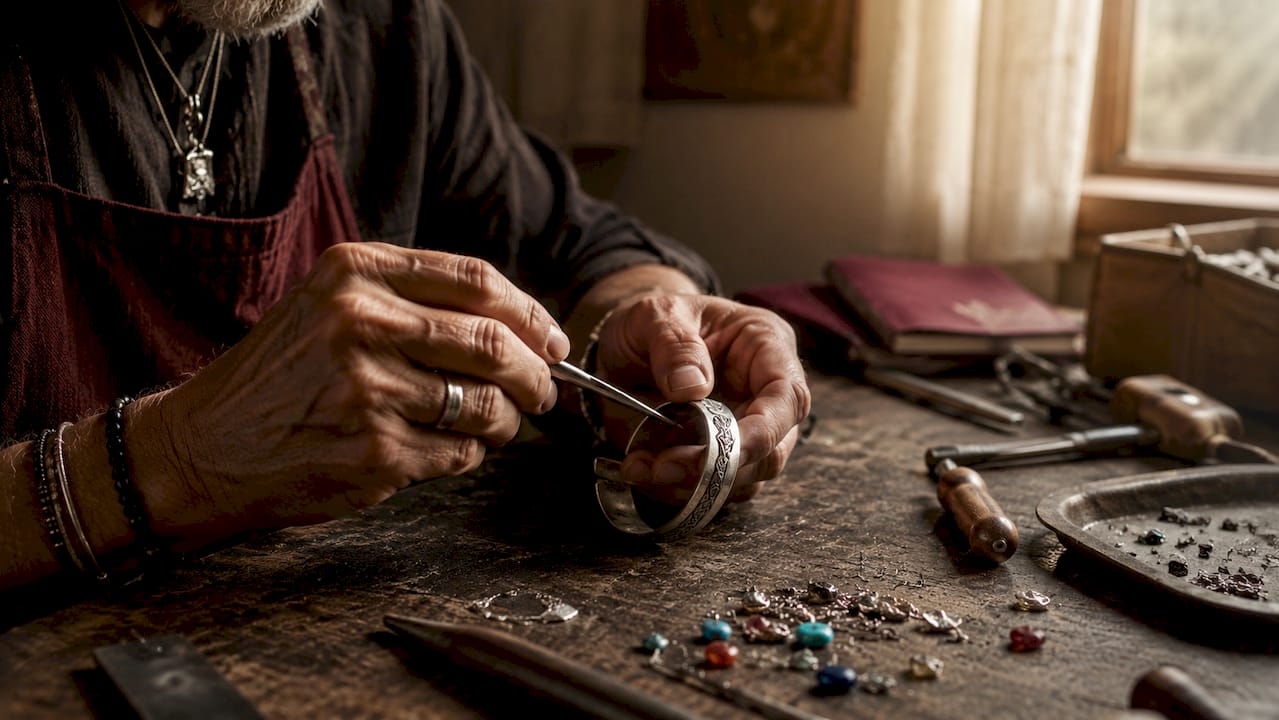
The link between artisanal technique and cultural identity is direct and measurable. Sardinian filigree is a perfect example: very thin threads of gold or silver precisely interwoven form structures that represent bonds, continuity, and social relationships. The technique itself is a message.
Four elements define the cultural value of an artisanal ethnic jewel:
- The processing technique. Sardinian filigree requires years of apprenticeship. Each intertwining follows patterns passed down orally by master goldsmiths. This transmission of knowledge is an integral part of cultural heritage, inseparable from the final product.
- Local materials and their meaning. Silver in Sardinia was associated with purity and protection. Lapis lazuli, turquoise, and onyx, used in many Eastern goldsmithing traditions, carry precise spiritual meanings related to chakras and healing energies.
- Stratified historical influences. Sardinian jewelry shows traces of Phoenician, Byzantine, and Spanish influences. Each domination has left its mark on the forms and decorative motifs. Reading an ethnic jewel means reading the history of a territory.
- Contemporary evolution. Sa Bambuledda has evolved with modern materials and forms, maintaining its identity role even in new generations. This demonstrates that tradition is not a museum: it is a living organism.
Pro tip: When evaluating artisanal ethnic jewelry, look for irregularities. Small imperfections visible to the naked eye are the signature of the human hand and confirm the authenticity of the craftsmanship. A perfectly uniform piece is almost certainly industrial.
African tribal goldsmith art follows the same logic. African tribal jewelry functions as visual storytelling, encoding history, rank, and belonging in forms that every member of the community can read. The principle is universal: ethnic jewelry speaks before you even open your mouth.
How to respect cultural identity when purchasing ethnic jewelry
Purchasing ethnic jewelry with awareness is a cultural act, not just a commercial one. The risk of cultural appropriation exists when a symbol is worn without knowing its meaning or without respecting the context from which it originates.
- Inform yourself about the meaning before purchasing. Some materials and forms were reserved for specific social roles or age groups. This distinction helps preserve the cultural authenticity and respect for the traditions associated with the jewelry.
- Choose artisanal producers with roots in tradition. Jewelry produced by an artisan who belongs to the reference culture guarantees authenticity and supports the local economy. Look for information about the origin of the piece and the production method.
- Verify silver certifications. For silver jewelry, the 925 hallmark indicates a high-quality alloy. This verification is the first step to distinguish an authentic artisanal piece from an industrial copy.
- Avoid sacred symbols used as mere fashion. Deities like Durga, Kali, or Hanuman have a precise spiritual weight in Hindu traditions. Wearing them requires at least a basic understanding of their meaning.
- Support slow fashion and artisan jewelry. Purchasing fewer pieces, but of quality and certified origin, is the most respectful choice for both the culture of origin and the environment.
Conscious consumption is not a limitation: it is a form of respect that enriches the experience of the wearer.
How do ethnic jewelry become meaningful cultural gifts?
Ethnic jewelry have an added value in their history and craftsmanship compared to industrial products. Made with precious materials and traditional techniques, they represent identity, memory, and shared narrative. This makes them original gifts with an emotional weight that a mass-produced object cannot have.
Giving ethnic jewelry as a gift means conveying a precise cultural message. Here's how to choose the right piece:
- Connect the jewelry to a personal story. A pendant with Durga or Kali is not just a beautiful object: it is a symbol of strength and protection with millennial roots. Giving it to someone going through a difficult time has a meaning that goes beyond material value.
- Consider the material as part of the message. Hand-worked 925 silver communicates care and attention. Natural stones like lapis lazuli or turquoise add a symbolic layer linked to the spiritual traditions of reference.
- Choose pieces with documented history. An artisanal ethnic jewel with a card describing its origin and meaning becomes a complete cultural gift. The recipient receives both the object and the knowledge.
| Type of ethnic jewelry | Meaning as a gift |
|---|---|
| Pendant with Durga in antique silver | Protection and feminine strength, suitable for moments of change |
| Pendant with Kali in 925 silver | Transformation and courage, ideal for those facing new beginnings |
| Hanuman pendant in 925 silver | Devotion and loyalty, perfect as a symbol of deep connection |
| Traditional coral necklace | Protection and belonging, with roots in Italian traditions |
Handmade jewelry as an original gift works because it carries a narrative. Those who receive them do not just get an object: they come into contact with a living tradition. You can find pieces like the Durga pendant or the Kali pendant that combine authentic craftsmanship and deep ethnic symbolism.
Key points
Ethnic jewelry are visual languages that communicate identity, social role, and cultural memory through materials, forms, and artisanal techniques specific to each tradition.
| Point | Details |
|---|---|
| Symbolic function | Each ethnic jewel carries codes of protection, status, and belonging legible to the reference community. |
| Craftsmanship as identity | Techniques like Sardinian filigree transmit culture and history, not just aesthetics. |
| Cultural respect | Informing oneself about the meaning of a jewel before wearing it preserves the authenticity of the tradition. |
| Value as a gift | Artisanal ethnic jewelry transmits narrative and memory, qualities that an industrial product cannot replicate. |
| Living evolution | Goldsmithing traditions update over time without losing their original identity core. |
Rediscovering ethnic jewelry: a personal reflection
Working with artisanal ethnic jewelry for years, I've learned something that books don't teach: the value of a piece is not in its price, but in the density of meaning it carries. When someone asks me why a Hanuman pendant costs more than a generic pendant, the answer isn't about the weight of the silver. It's about the hours of an artisan's work, the tradition they've learned, and the symbol they've chosen to honor.
What worries me, looking at the current market, is the tendency to empty symbols of their content. A Kali jewel sold as a "boho accessory" without any explanation is a missed opportunity. Not for moralistic reasons, but because it deprives the buyer of the most interesting part: the story.
My position is clear. Those who approach ethnic jewelry with genuine curiosity make a culturally richer choice than those who buy a fashion jewel without asking where it comes from. And this curiosity is cultivated: just read, ask, and choose producers who tell their stories with honesty.
— Il mondo di Wit
Handcrafted ethnic jewelry with history and meaning
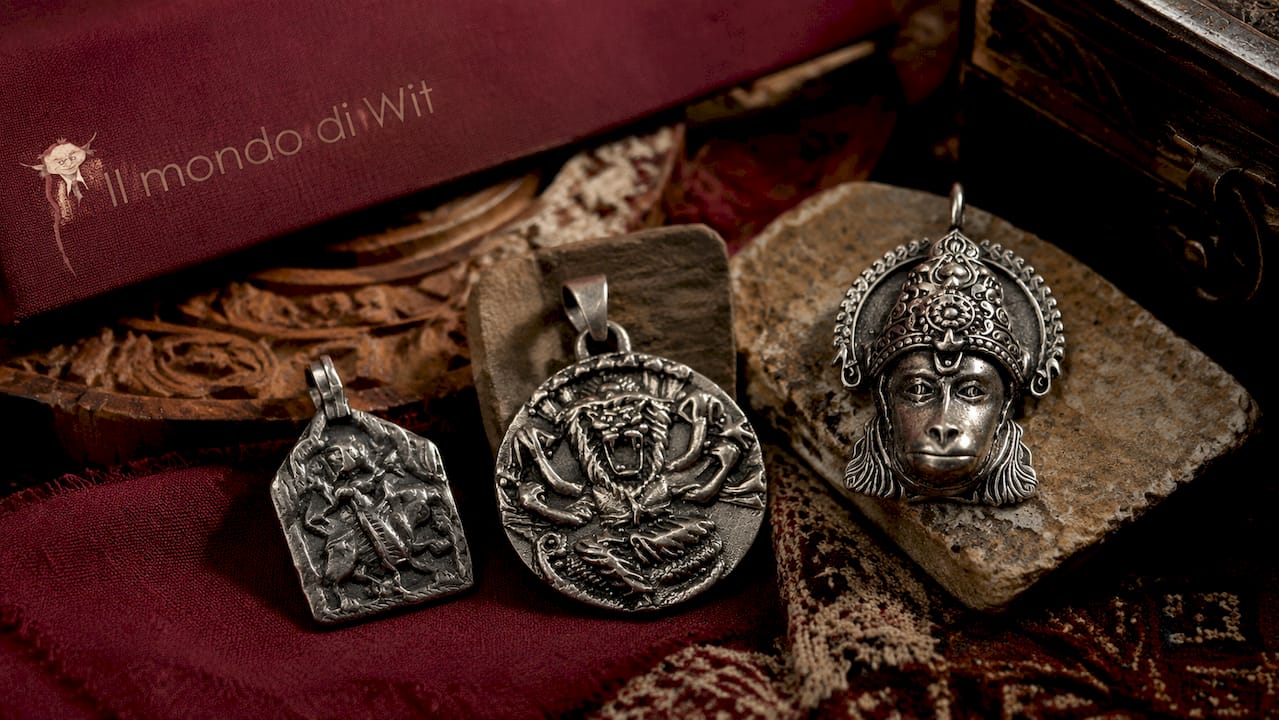
Il mondo di Wit selects handcrafted ethnic jewelry in 925 silver and antique silver, handmade with natural stones and symbols from specific cultural traditions. Each piece is documented in its meaning and origin. The Hanuman pendant in 925 silver is an example of how craftsmanship and symbolism come together in an object with deep cultural roots. For those looking for ethnic jewelry as original gifts or as an expression of their identity, the complete collection is available on Il mondo di Wit. Every purchase supports artisans who work respecting traditions.
Frequently asked questions
What are ethnic jewelry?
Ethnic jewelry are ornaments that communicate cultural identity, social role, and belonging through symbols, materials, and artisanal techniques specific to a community or tradition.
How to recognize authentic ethnic jewelry?
Authentic ethnic jewelry shows irregularities typical of manual craftsmanship, certified materials like 925 silver, and clear documentation about its cultural origin and the meaning of the symbols it carries.
Can ethnic jewelry be worn by anyone?
Not all ethnic jewelry was intended for everyone: some were reserved for specific roles such as married women or figures of rank. Informing oneself before wearing them is the most respectful way to approach the tradition.
Why are artisanal ethnic jewelry original gifts?
Artisanal ethnic jewelry carry a cultural narrative that an industrial product cannot replicate. Giving one as a gift means transmitting history, symbolism, and artisanal care in a single object.
What is the difference between ethnic jewelry and traditional jewelry?
The term "traditional jewelry" indicates belonging to a specific local culture, such as Sardinian or Ciociarian tradition. "Ethnic jewelry" is a broader term that includes traditions from all over the world, from African tribal goldsmith art to Hindu and Eastern traditions.